Six years is a long time to sit on a Norse mythology action game and still release something that feels unfinished in places. That is the paradox at the heart of this Asgardian Rising review: a title with genuine ambition, a combat system that occasionally sings, and enough rough edges to make you wonder what the extra development time actually produced. Players who booted it up expecting a polished successor to the genre's better entries have come away with mixed reactions, and the Steam discussion boards reflect that split almost perfectly.
What makes this release worth dissecting isn't just the gameplay loop or the visual presentation. It's the gap between marketing promises and what actually ships. Before diving into the mechanical details, it's worth pointing anyone doing pre-purchase research toward a broader asgardian rising review that covers the wider context of the game's development history and community reception, since that background helps frame why certain design choices landed the way they did. From there, the specifics of movement, combat timing, and progression systems tell a more complete story than any single impression can.
This piece breaks down the mechanics that matter, the numbers behind the current review score, and whether the Steam community consensus lines up with what you'll actually experience in the first ten hours. No filler, no marketing language - just an honest accounting of what works and what doesn't.
What Is Asgardian Rising?
Setting and Narrative Premise
Asgardian Rising drops players into a fractured version of Norse cosmology where the nine realms have fallen out of alignment, and the protagonist - a disgraced warrior exiled from Asgard - must restore balance while uncovering a conspiracy among the gods themselves. The premise isn't groundbreaking territory for the genre, but it's executed with enough environmental storytelling and voiced dialogue to keep players invested through the midgame slump that many action titles suffer from.
Development Background and Release Context
The studio behind the project spent roughly five years in active development, with two public beta phases that shaped several combat adjustments ahead of launch. That extended timeline explains some of the polish in animation work, but it also raises expectations that the final product doesn't always meet, particularly regarding bug density in the first patch cycle.
Positioning Within the Action-RPG Genre
Compared to other mythology-inspired action games, Asgardian Rising leans harder into methodical, stamina-based combat rather than the fast-paced hack-and-slash approach some players expected from early trailers. This distinction matters enormously for anyone deciding whether the title fits their preferred playstyle.
Asgardian Rising Gameplay Breakdown
Core Movement and Exploration
Movement feels weighty in a deliberate way - there's no floaty double-jump nonsense, and traversal across the realm hubs uses a mix of climbing, gliding via valkyrie wings unlocked mid-story, and shortcut portals. Exploration rewards curiosity: side paths often hide lore fragments or crafting materials rather than combat encounters, which keeps pacing varied.
Progression Systems and Skill Trees
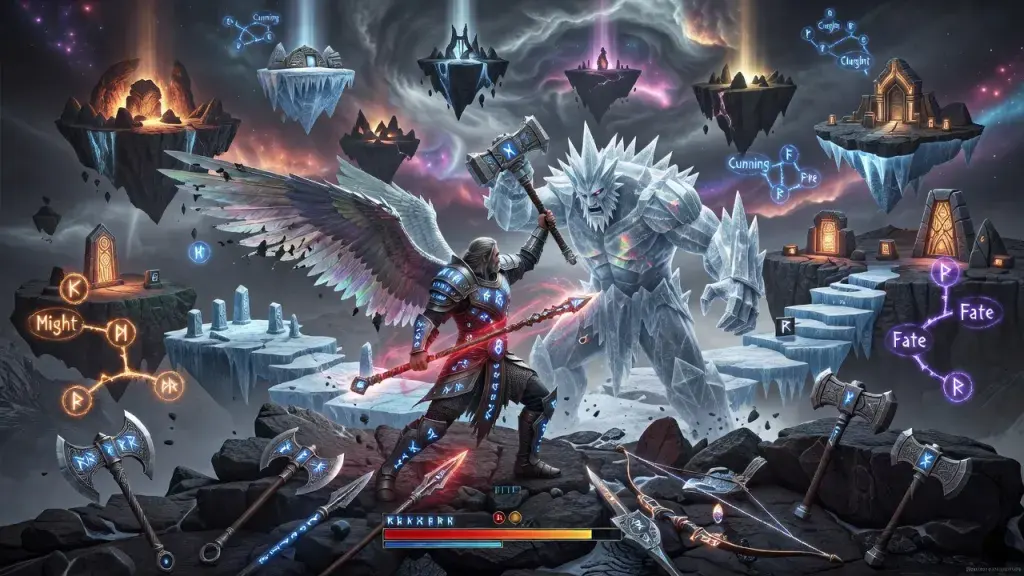
The skill tree splits into three branches - Might, Cunning, and Fate - each tied to a different combat approach. Respec costs are low enough that experimentation feels encouraged rather than punished, a design decision that stands out positively in most player feedback.
Crafting and Loot Structure
Loot follows a rarity tier system common to the genre, but the crafting layer adds a wrinkle: runic inscriptions can be swapped between weapons, letting players preserve a favorite weapon's aesthetic while updating its stats. It's a small touch that reduces the usual loot-hoarding fatigue.
- Three distinct skill branches with low-cost respec
- Weapon runes transferable between gear pieces
- Environmental puzzles gating optional loot vaults
- Mount and glider traversal unlocked by mid-game story beats
Asgardian Rising Combat System Review
Weapon Variety and Combat Flow
The combat system revolves around stamina management across five weapon classes - dual axes, warhammer, spear, bow, and a rune-caster staff. Each has a distinct rhythm, and switching mid-fight is encouraged through a resource called "Fury" that builds as you land clean hits. This asgardian rising combat system review would be incomplete without noting how satisfying the warhammer's stagger mechanic feels against larger enemies - it's the standout weapon class by a clear margin.
Enemy Design and Difficulty Curve
Early-game enemies telegraph attacks generously, but the difficulty curve spikes around the fourth region, introducing enemies with delayed-hit windups that catch unprepared players off guard. This spike has drawn criticism in community discussions as feeling abrupt rather than earned.
Boss Encounters
Boss fights are where the combat system shows its strongest design work. Multi-phase encounters force weapon switching mid-fight, punishing players who lean on a single build. The final confrontation against the frost jötunn Hrimgrast stands out as one of the better-choreographed boss fights in recent memory for the genre.
Combat Shortcomings Worth Noting
Parry timing feels inconsistent against certain enemy animations, and hitbox generosity varies noticeably between weapon types. These aren't dealbreakers, but they're frequent enough complaints in player feedback to mention directly.
Asgardian Rising Review Score: What the Numbers Say
Critical Reception Overview
Aggregate critical scores for Asgardian Rising sit in the "generally favorable" range, with most outlets praising the combat depth while docking points for technical stability issues at launch. The asgardian rising review score across major outlets averages in the mid-to-high 70s out of 100, a respectable but not exceptional result for a full-price release.
How the Score Breaks Down by Category
Reviewers consistently rate the combat system and art direction higher than the narrative pacing and technical performance. This uneven distribution suggests a game with a strong core loop hampered by execution issues rather than fundamental design flaws.
Comparing Critic Scores to Player Sentiment
Player scores trend slightly lower than critic averages, largely due to launch-week bugs that critics playing pre-release build versions didn't encounter. This gap between critical and community reception is worth factoring into any purchase decision.
Asgardian Rising Steam Review Analysis
Overall Steam Rating Trends
The asgardian rising steam review tag currently sits at "Mostly Positive," with roughly seven out of ten reviews recommending the game. That's a solid but not overwhelming endorsement, and the trend line shows improvement as patches address early stability complaints.
Common Praise in Player Reviews
Recurring praise centers on the weapon-switching combat flow, the visual design of the nine realms, and the soundtrack's integration with boss phases. Many reviewers specifically call out the warhammer and rune-caster staff as standout additions to the genre's typical weapon roster.
Recurring Complaints and Criticism
The most frequent negative feedback involves frame pacing issues on certain hardware configurations, an inventory UI that becomes cluttered past the midgame, and a difficulty spike that several players describe as poorly telegraphed rather than genuinely challenging.
How Post-Launch Patches Have Shifted Sentiment
Two major patches since release have addressed the worst of the stability complaints, and review sentiment has trended upward accordingly. This pattern - rocky launch followed by steady improvement - has become common enough in the genre that prospective buyers increasingly wait a few weeks before purchasing.
Should You Buy Asgardian Rising?
Who Will Enjoy This Game Most
Players who prioritize weighty, stamina-based combat over fast-paced action, and who enjoy methodical boss encounters, will get the most value here. Fans of Norse mythology settings specifically will appreciate the environmental design work.
Who Should Consider Waiting or Skipping
If technical polish matters more to you than mechanical depth, waiting for another patch cycle or two makes sense. Players seeking fast, twitch-reflex combat will likely find the pacing too deliberate for their taste.
Final Verdict
Asgardian Rising delivers a combat system with real depth and boss encounters that rank among the genre's better offerings this year, undercut by launch technical issues that have only partially been resolved. It's a game worth owning, but perhaps not worth buying at full price on day one.
Frequently Asked Questions
Is Asgardian Rising worth buying at full price right now?
If technical stability matters to you, wait for at least one more patch cycle. The combat system and boss design justify the price for genre enthusiasts, but the current bug density affects the experience enough that a discounted purchase is the safer choice for casual players.
How long does it take to complete the main story?
A focused playthrough hitting the main story beats runs roughly 18 to 22 hours. Players exploring side content, optional loot vaults, and lore fragments should expect closer to 30 hours.
Which weapon class is best for beginners?
The spear offers the most forgiving learning curve thanks to its longer reach and quicker recovery frames after attacks. The warhammer, while satisfying, punishes mistimed swings harshly and suits players who've already learned enemy attack patterns.
Does the game run well on older hardware?
Performance on mid-range systems from three or more years ago shows noticeable frame pacing drops during larger enemy encounters. Recent patches have improved this somewhat, but players with older GPUs should lower particle effect settings for a smoother experience.
Is the difficulty spike in the fourth region a bug or intended design?
It appears to be intended design rather than a bug, though the developers have acknowledged in patch notes that the pacing of that spike needed smoothing. Subsequent balance patches have softened it slightly, but it remains the most commonly cited difficulty complaint among players.
How does the combat system compare to other Norse mythology action games?
It trades speed for weight and deliberation, distinguishing itself from faster-paced competitors in the space. Players who prefer stamina management and weapon-switching mechanics over reflex-based combos will find more depth here than in many comparable titles.